CPR-Lesson 10-Defibrillation and AED
Time is life
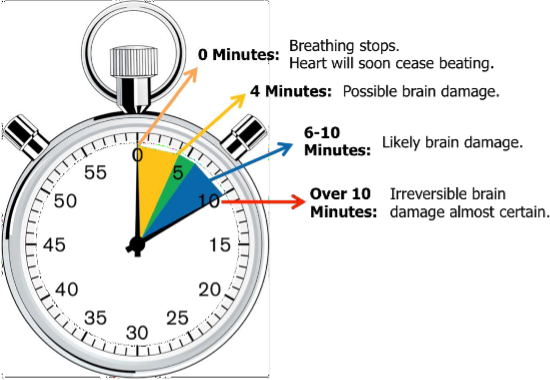
If a first aider failed to initiate the CPR immediately, it could lead to brain death, which is not recoverable. A prompt response to CPR can increase the chance of survival for the casualty in any situation.
As a first aider, you need to ensure that timing is crucial when handling a life-and-death situation. For brain damage to occur, it will take only four 4 minutes for a complete brain death due to oxygen deprivation.
As per the Australian Resuscitation Council, if a casualty has no signs of life and becomes unconscious, not responding, or not breathing normally or moving, you need to start compressions or CPR.
CPR should not be stopped until ambulance personnel or an Automated External Defibrillator (AED) arrive.
Defibrillation
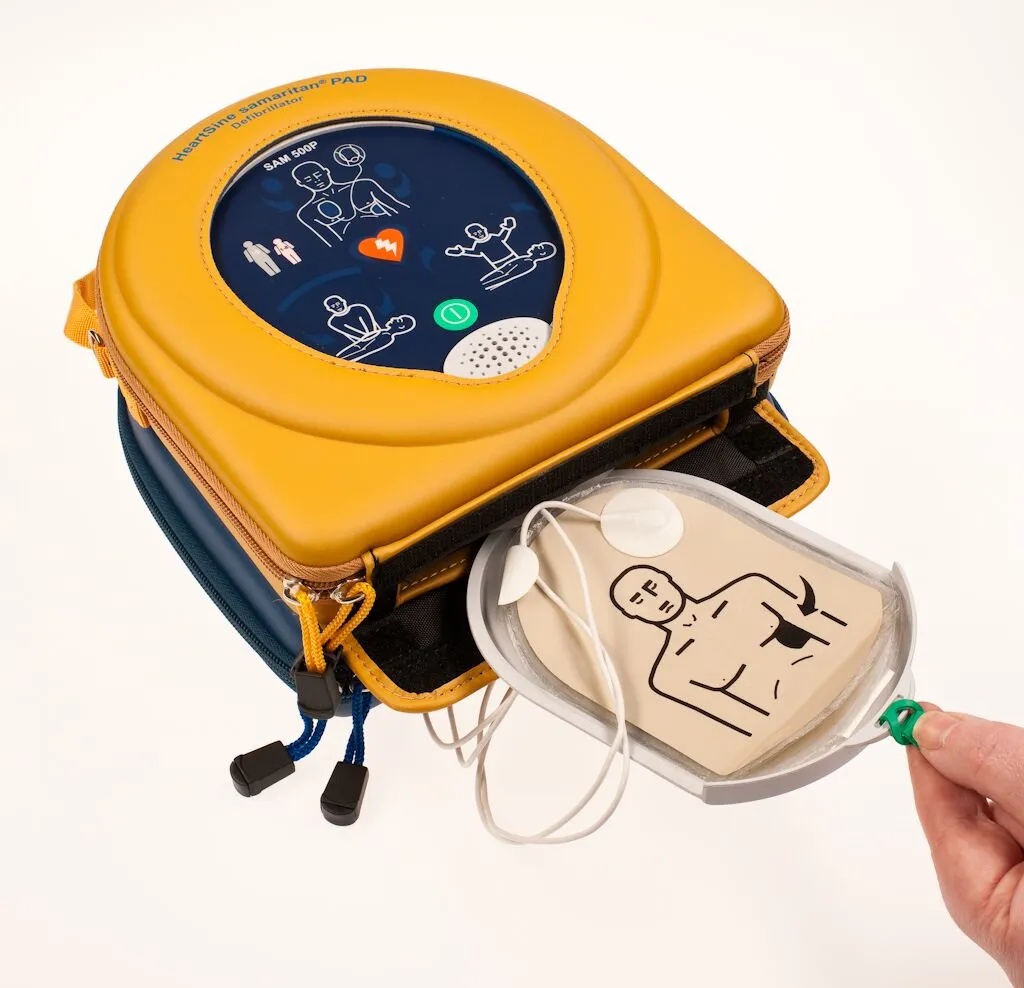
Defibrillation is the emergency procedure in which a first aider uses an Automated External Defibrillator (AED) to deliver a controlled electric shock to the heart. An AED is a portable, easy-to-operate electronic device used when a casualty is experiencing Sudden Cardiac Arrest (SCA).
An AED is used when you find a person who is not responding and not breathing normally.
When the machine detects an abnormal heart rhythm, an electrical shock is sent to the heart, which can restore a normal heart rhythm. People who need CPR have abnormal heart rhythms.
Attach an AED if available and follow the manufacturer’s instructions in the operation manual or the prompts shown on the unit screen.
AEDs are easy to use, so you don’t need formal training. Most have visual and/or verbal instructions that you should follow exactly, as different machines may vary slightly.
Once the AED pads have been attached to the casualty, they must be applied directly to the skin, which may need to be dried – the device will detect the person’s heart rhythm and deliver an electric shock if required.
Once the shock has been delivered, immediately continue CPR for a further 2 minutes, leaving the AED attached and following any prompts until ambulance personnel arrive.
Standard adult AEDs and pads can be used for children older than 8 years. It is best to use paediatric pads and an AED with a paediatric option for children between 1 and 8 years. If this is not available, an adult AED can be used as long as the pads don’t touch each other on the child’s chest.
AED signage
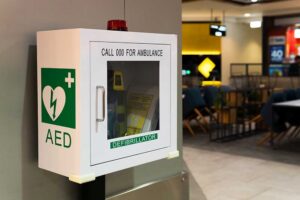
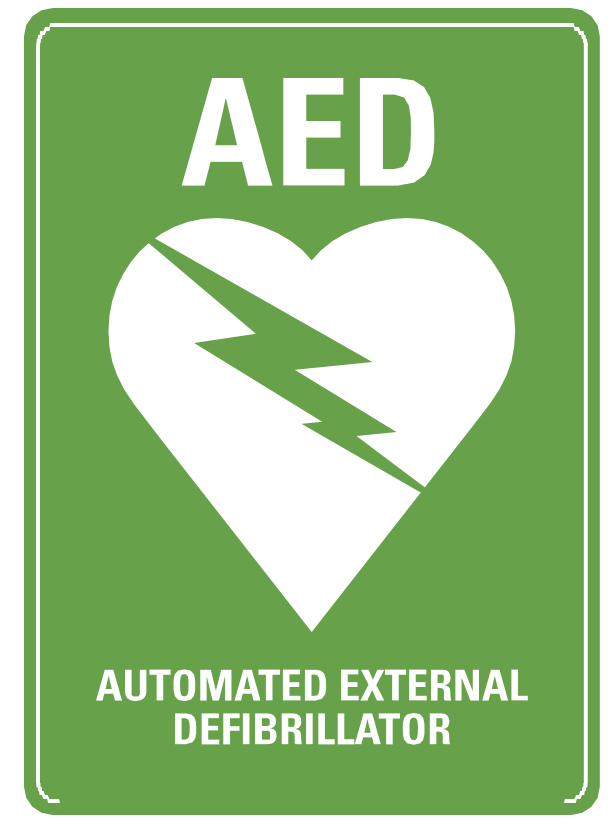
In Australia, there is no standard for AED signage; the Australian Resuscitation Council has developed this sign for use in Australia to identify and direct people to an AED.
Expanded Learning Materials
Expanded
Learning
Materials