Frst Aid-Lesson 9-Diabetes
Symptoms of diabetes
Diabetes mellitus refers to a group of diseases that affect how your body uses blood sugar (glucose). Glucose is vital to your health because it’s an important source of energy for the cells that make up your muscles and tissues. It’s also your brain’s main source of fuel.
The underlying cause of diabetes varies by type. But, no matter what type of diabetes you have, it can lead to excess sugar in your blood. Too much sugar in your blood can lead to serious health problems.
Chronic diabetes conditions include type 1 diabetes and type 2 diabetes. Potentially reversible diabetes conditions include prediabetes and gestational diabetes. Prediabetes occurs when your blood sugar levels are higher than normal, but not high enough to be classified as diabetes. And prediabetes is often the precursor of diabetes unless appropriate measures are taken to prevent progression. Gestational diabetes occurs during pregnancy but may resolve after the baby is delivered.
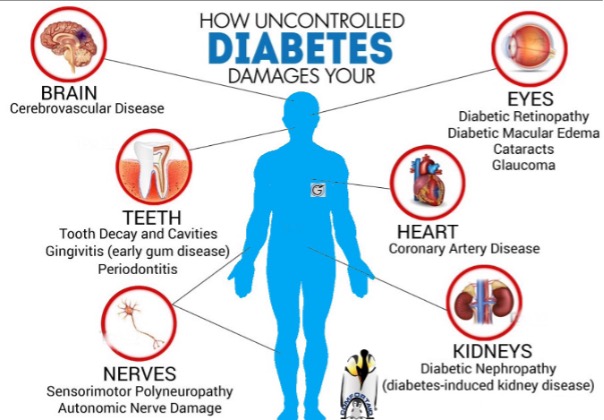
Symptoms of type 1 diabetes and type 2 diabetes
- Increased thirst
- Frequent urination
- Extreme hunger
- Unexplained weight loss
- Presence of ketones in the urine (ketones are a by-product of the breakdown of muscle and fat that happens when there’s not enough available insulin)
- Fatigue
- Irritability
- Blurred vision
- Slow-healing sores
- Frequent infections, such as gum or skin infections and vaginal infections
Type 1 diabetes can develop at any age, though it often appears during childhood or adolescence.
Type 2 diabetes, the more common type, can develop at any age, though it’s more common in people older than 40.
Causes of type 1 diabetes
The exact cause of type 1 diabetes is unknown. What is known is that your immune system — which normally fights harmful bacteria or viruses — attacks and destroys your insulin-producing cells in the pancreas. This leaves you with little or no insulin. Instead of being transported into your cells, sugar builds up in your bloodstream.
Type 1 is thought to be caused by a combination of genetic susceptibility and environmental factors, though exactly which environmental factors are involved remains unclear. Weight is not believed to be a factor in type 1 diabetes.
Causes of type 2 diabetes
In prediabetes — which can lead to type 2 diabetes — and in type 2 diabetes, your cells become resistant to the action of insulin, and your pancreas is unable to make enough insulin to overcome this resistance. Instead of moving into your cells where it’s needed for energy, sugar builds up in your bloodstream.
Exactly why this happens is uncertain, although it’s believed that genetic and environmental factors play a role in the development of type 2 diabetes, too. Being overweight is strongly linked to the development of type 2 diabetes, but not everyone with type 2 is overweight.
Causes of gestational diabetes
During pregnancy, the placenta produces hormones to sustain your pregnancy. These hormones make your cells more resistant to insulin.
Normally, your pancreas responds by producing enough extra insulin to overcome this resistance. But sometimes your pancreas can’t keep up. When this happens, too little glucose gets into your cells and too much stays in your blood, resulting in gestational diabetes.
First aid for diabetes: high blood sugar (hyperglycaemia)
- If the patient is on medication, ask whether they need assistance with administering it. Only help the patient if they request it.
- Encourage the patient to drink water.
- Seek medical aid if symptoms worsen.
- If the patient has not yet been diagnosed with diabetes, encourage them to seek medical aid.
First aid for diabetes: low blood sugar (hypoglycaemia)
- Help the patient to sit or lie in a comfortable position.
- Reassure the patient.
- Loosen any tight clothing.
- Give the patient sugar, such as fruit juice or a soft drink (NOT ‘diet’ eg Coke Zero, Pepsi Max), sugar, jellybeans, glucose tablets.
- Continue giving sugar every 15 minutes until the patient recovers.
- Follow with carbohydrates, eg a sandwich, milk, fresh or dry fruit, or dry biscuits and cheese.
- If there is no improvement in symptoms or the patient becomes unconscious, call triple zero (000) for an ambulance.
Expanded Learning Materials
Expanded
Learning
Materials