First Aid-Lesson 3-ARC, CRP and DRSABCD
Secondary survey
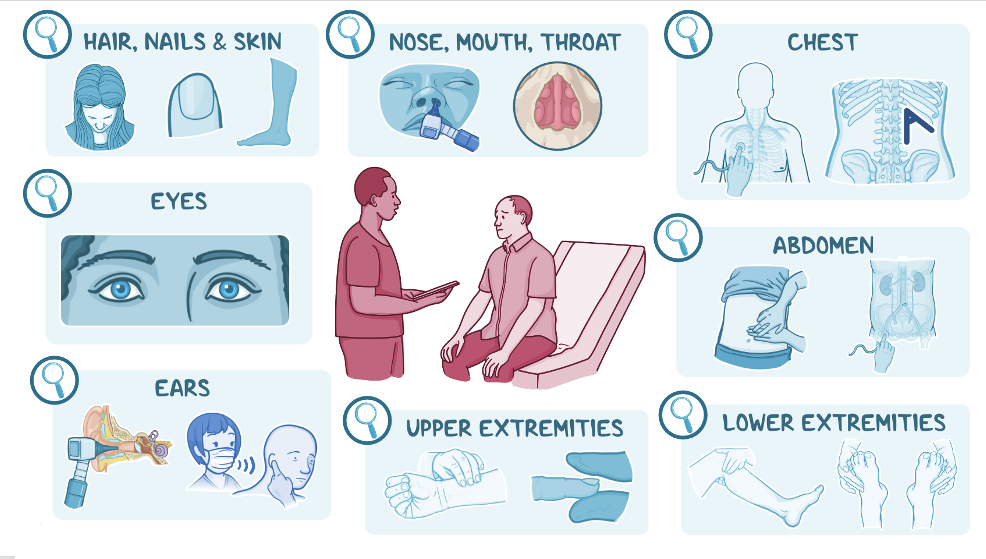
If the casualty has responded to us, then we do not need to check their airways, although we do need to investigate what is wrong. The secondary survey consists of two parts – verbal questioning using the SAMPLE acronym and a visual assessment, which is the “head to toe” physical assessment.
Once consent has been gained from the casualty to proceed with a head-to-toe assessment, we use this to collect information. Does the casualty have a medic alert piece of jewellery that they are wearing that would identify any conditions?
Head – inspect for any bleeding and obvious deformity. Check the ears for blood, fluid or bruising. Check the eyes for reactivity to light and equal-sized pupils. Check the nose for bleeding or deformity. Check the mouth for missing teeth, clench their teeth (to see if the top meets the bottom), and anything blocking the airway. Listen to them speaking for any hoarseness or other abnormalities. Palpate the skull, feeling for any soft, boggy areas or crepitus.
Neck – inspect for any bruising, bleeding or deformity. If trained, palpate for a carotid pulse.
Chest – inspect for equal rise and fall, paradoxical movement (normally, when you breathe in and out, your chest rises and falls respectively. With paradoxical movement, you breathe in, and your chest falls; breathe out, and your chest rises. This is indicative of a flail chest injury. bleeding, bruising, and accessory muscle use (think asthma). Palpate for tenderness and crepitus.
Abdomen – inspect for bruising, bleeding, penetrating injuries, distention, and priapism (spinal injury). Palpate for pain/tenderness, guarding, rigidity, rebound tenderness (this is when you push down, no pain, release suddenly, and they have pain).
Pelvis – inspect for bruising, bleeding and deformity. Palpate for tenderness along the bone, but DO NOT SPRING THE PELVIS (i.e. push down on both sides of the pelvis. If they have a pelvic fracture, this will make things a whole lot worse).
Arms and legs – inspect for bleeding, bruising, deformity, and range of motion. Palpate for strength/weakness, sensation/touch/temperature, pulses, crepitus.
Back – inspect for bleeding, bruising, and deformity. Palpate for pain/tenderness.
Now that we’ve had a good look at our patient, they may have identified some pain during your inspection and palpation. It’s important to really question your patient about their pain, as this can provide valuable information.