First Aid-Lesson 13-Burns
Symptoms of burns
One of the most common household injuries, and the majority of those occur to children. Burns cause affected skin cells to die.
Complications
- Infections
- Blood loss
- Shock
- Death
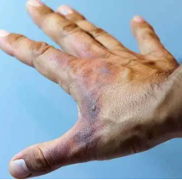
First aid for burns
- Check for dangers, make the scene safe.
- If a casualty suffers a chemical source burn, remove any clothing stained with chemicals.
- If a casualty suffers an electrical source burn, turn off the power.
- Call 000 for help.
- Cool the burn area with gentle running water for at least 20 minutes.
- Cover with a clean, light, lint-free dressing or cling (Glad) wrap.
Burn degrees
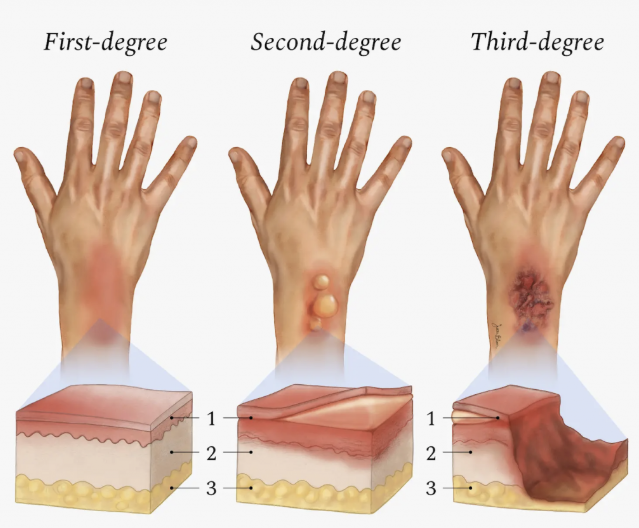
There are three primary types of burns: first-degree, second-degree, and third-degree. Each degree is based on the severity of skin damage, with first-degree being the least severe and third-degree the most severe.
There are also fourth-degree burns. This type of burn includes all of the symptoms of a third-degree burn and also extends beyond the skin into tendons and bones.
Damage includes:
- First-degree burns: red, non-blistered skin.
- Second-degree burns: blisters and some thickening of the skin.
- Third-degree burns: widespread thickness with a white, leathery appearance.
Rules of nine
Severe burns also carry the risk of hypothermia and hypovolemia. Dangerously low body temperatures characterise hypothermia. While this may seem like an unexpected complication of a burn, the condition results from excessive heat loss from the injury. Hypovolemia, or low blood volume, occurs when your body loses too much blood from a burn.
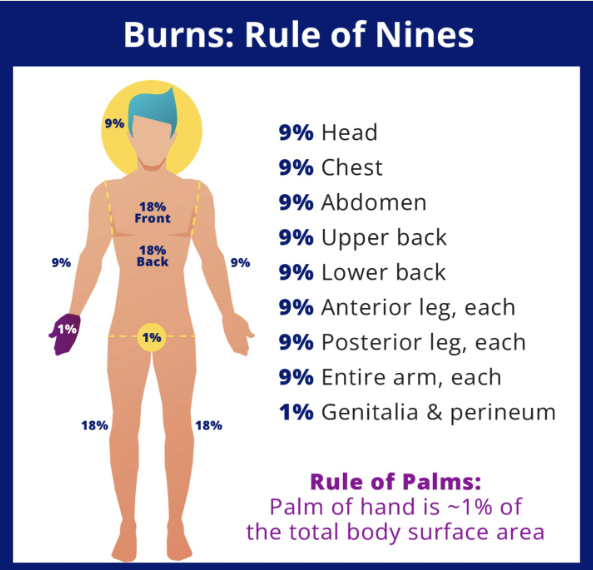
Burns can be measured by estimating the body surface area of an adult who has been burned by using multiples of 9. When measuring burns in adults, the rule of nines assesses the percentage of burn and helps guide treatment decisions, including fluid resuscitation, and is part of the guidelines for determining transfer to a burn unit.
Expanded Learning Materials
Expanded
Learning
Materials