CPR-Lesson 5-Airway and the recovery position
Airway
An open or “patent” airway is vital for life as it enables airflow between the lungs and the environment, facilitating essential oxygenation and carbon dioxide removal.
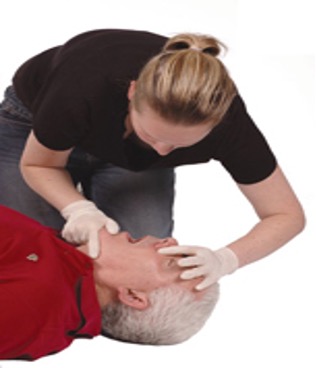
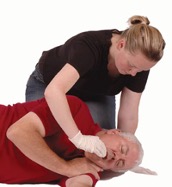
To check their airway, use the head-tilt/chin-lift technique, as it helps lift the tongue from the back of the throat.
- One hand is placed on the casualty’s forehead to tilt the head back, while the fingers of the other hand are placed on the bony part of the chin to lift it up and outward.
- The mouth should then be gently opened by pulling down on the jaw to check for any obstruction.
- If any foreign material is present, move the casualty into the recovery position and allow it to drain from the mouth.
- An open airway is the most important thing, even if you think the casualty has a spinal injury.
You can identify if a person is breathing normally by
- Look for movement of the upper abdomen or lower chest.
- Listen for the escape of air from the nose and mouth.
- Feel for movement of the chest and upper abdomen.
Airway for infants
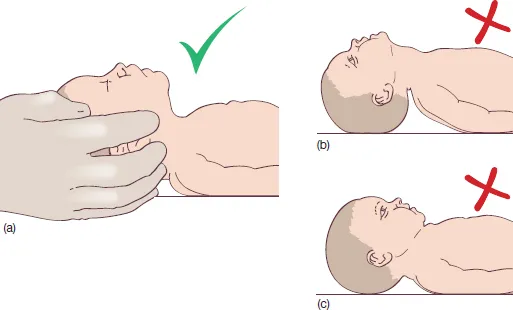
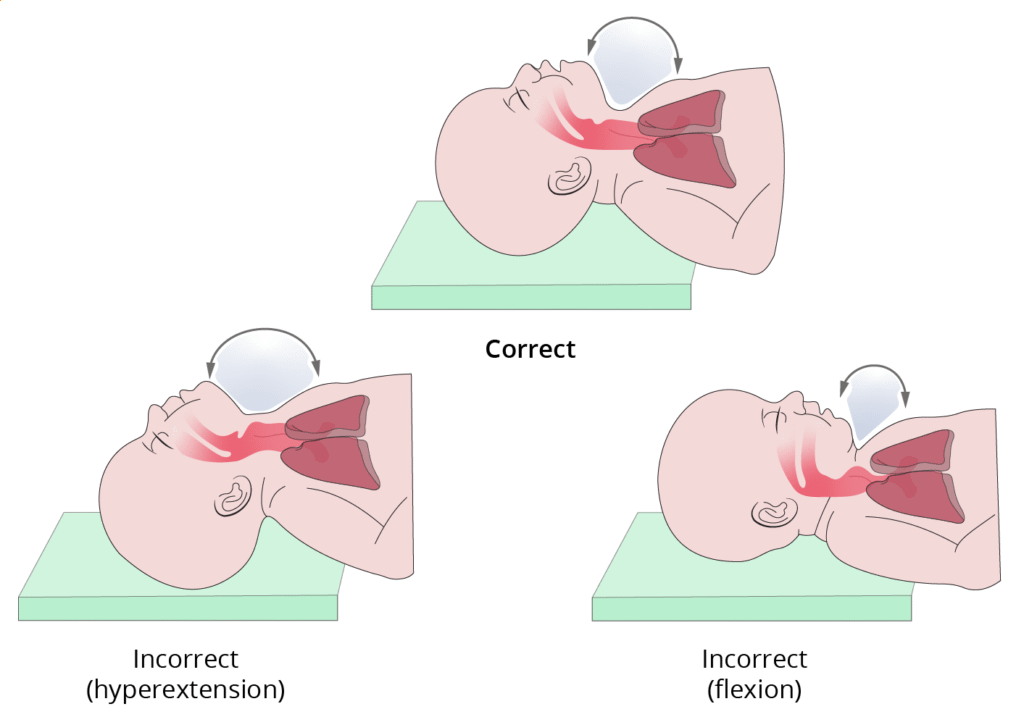
ATTENTION: When opening an infant’s airway, we should place the head in a “neutral” position.
The recovery position
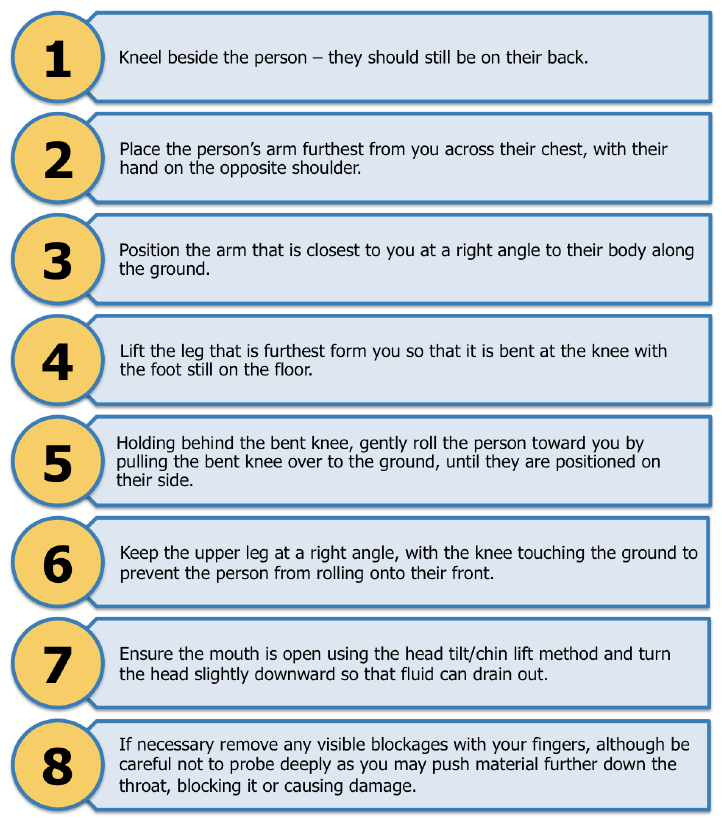
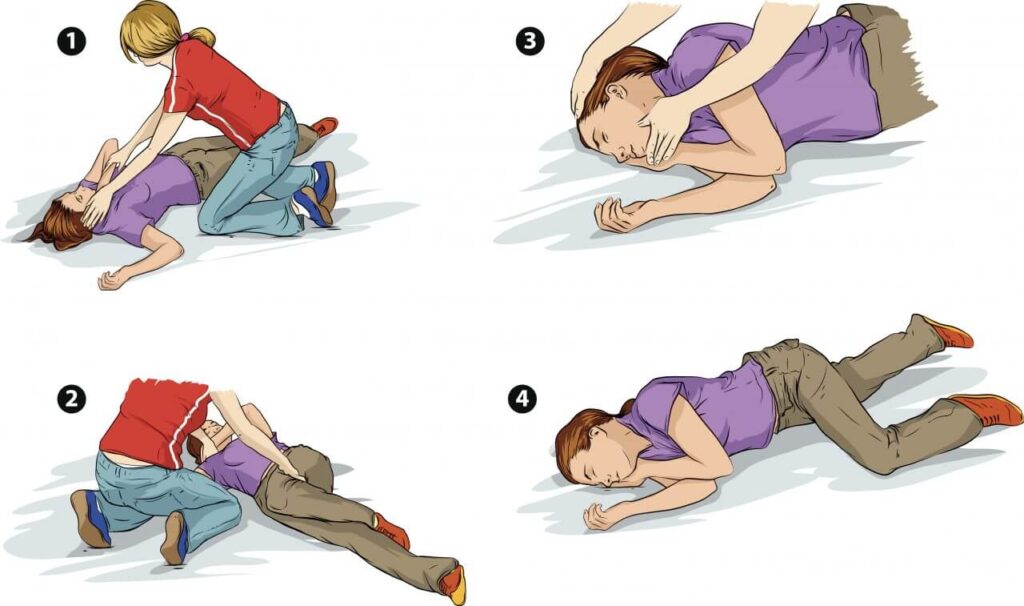
The recovery position is the best position for a casualty who is unconscious and breathing. It keeps their airway open and allows any vomit or other fluids to drain out so they don’t choke on it. You may need to keep supporting the person’s jaw to keep an open airway. You can do this using a ‘pistol grip’, which involves putting your thumb and forefinger just above the jawbone and opening the mouth slightly.
Expanded
Learning
Materials