CPR-Lesson 3-Conduct the initial assessment
Survey the scene
Once you arrive at the emergency scene, conduct a thorough initial assessment. In your initial assessment, you will:
- Survey the scene for hazards and risks (risk management).
- Assess the casualty to work out the type of emergency care needed.
Surveying the scene of the emergency will help you identify the type of incident and any immediate hazards or risks to the casualty, bystanders, and treating personnel/workers. Make sure you are not placing yourself at risk by trying to provide first aid and CPR.
Presence of bystanders
You might feel embarrassed about performing CPR in front of others, or assume someone else will do it.
Uncertainty about the person
The injured person may be a stranger, older, younger, of a different gender or race, etc. You should help them anyway, even if only by calling an ambulance.
Nature of the illness/injury
The emergency may be unpleasant or confronting (e.g., blood, vomit). You should still try to do as much as possible. Take a moment to collect yourself, but remember – it is still an emergency.
Fear of disease transmission
The risk of disease transmission is actually quite small. If you take appropriate precautions, you can greatly reduce the risks.
Fear of doing something wrong
As long as you do everything reasonably possible and follow your duty of care, you should not worry about making a mistake. Some first aid is better than no first aid.
Risk management
Before you start first aid treatment or CPR, you need to check for any hazards or risks in the area. If you find anything dangerous, you need to do something to control it.
- A HAZARD is the thing or situation that causes injury, harm or damage.
- A RISK is the chance of a hazard hurting you or somebody else, or causing some damage.
You need to make decisions and act quickly so the casualty’s injuries don’t worsen.
Following an accident, there may be a range of hazards at the scene.
Use all of your senses to check for hazards. Can you look, smell or hear anything that could be hazardous?
You should also talk to other people at the scene about any hazards they might have found.
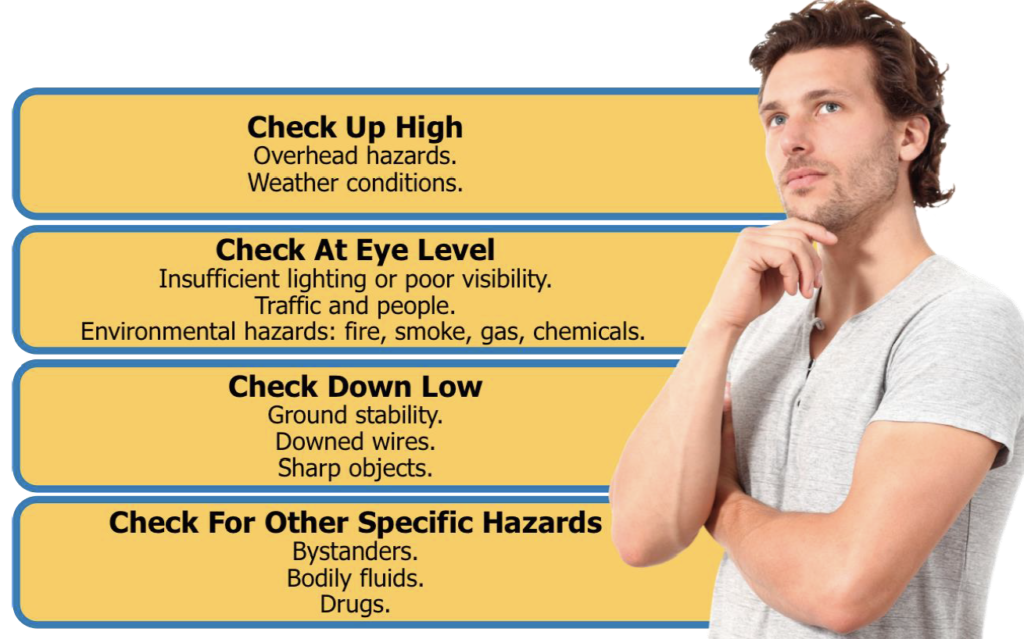
Conduct a Dynamic Risk Assessment (DRA)
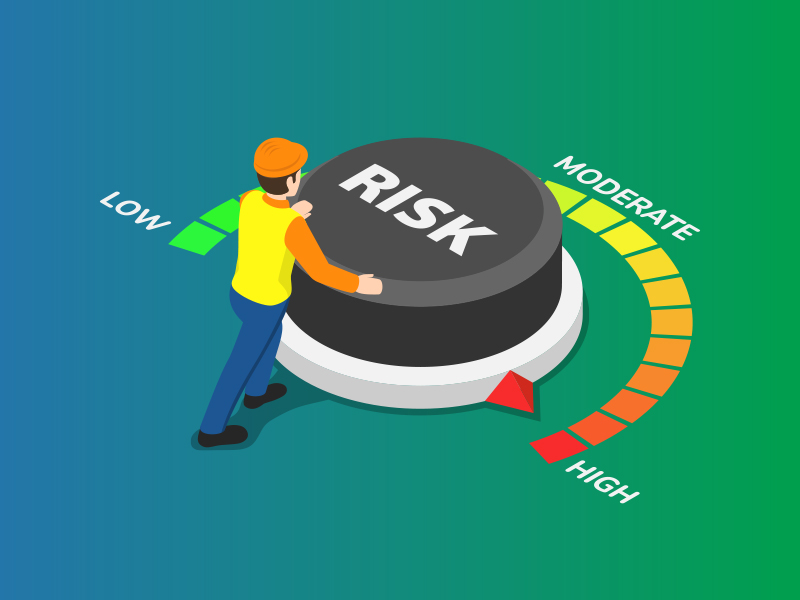
After you have found any hazards, you need to work out how bad they are:
1. What is the chance that the hazard will hurt someone or cause damage?
2. If it does happen, how bad will the injury or damage be?
This is called a risk assessment.
In an emergency situation, things can change dramatically and suddenly. There are unpredictable and unforeseen risks, and you need a consistent way to make judgments and assessments.
This is when you do a Dynamic Risk Assessment (DRA). The 3 concepts behind a DRA are:
- Risk in an emergency situation is assessed before, during and after providing first aid.
- You need to weigh up the benefits of going ahead with first aid against any risks involved.
- You should always think before you act, rather than act before you think.
Minimise risk
Once you know the hazards and risks, you must control them.
Control measures to minimise risk could include:
- Safe work practices, for example:
- Using protective equipment.
- Following infection control procedures.
- Using safe manual handling techniques.
- Eliminating or removing the hazard.
- Isolating the casualty from the hazard by:
- Asking people not involved in the treatment process to make space and/or leave the scene of the accident.
- Relocating the casualty to a place that doesn’t contain hazards.
Whatever you do, you must act quickly to make the situation as safe as possible. Your own safety is most important in any situation so risks must be reduced as much as possible.
You also need to make sure that the process doesn’t take so long that the casualty is worse off for lack of treatment.
If you are providing CPR in your workplace, refer to the first-aid or emergency-response plan. This will give you information on how to resolve the situation as quickly and effectively as possible.
Where possible, get the people around you to help control hazards, provided they are trained to do so.
Moving the casualty
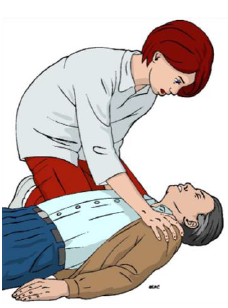
You may need to move a casualty away from hazards in the area and/or make it easier to reach them for treatment.
To ensure you don’t hurt yourself or the patient, always use safe manual handling techniques.
- You need to understand your own strengths and limitations. If you can, get somebody to help you move the casualty. Don’t hurt yourself in the process – you could cause further harm if you drop the person.
- You should remember to bend your knees, not your back, when lifting. This will help to avoid straining your back.
- Before moving the casualty, make sure they are comfortable about being moved and explain what you are going to do.
- Be careful not to twist or bend the casualty’s neck and back, as this could make their injuries worse. If it looks like any movement is hurting them, stop.