CPR-Lesson 7-CPR for infants
- Kneel by the side of the casualty.
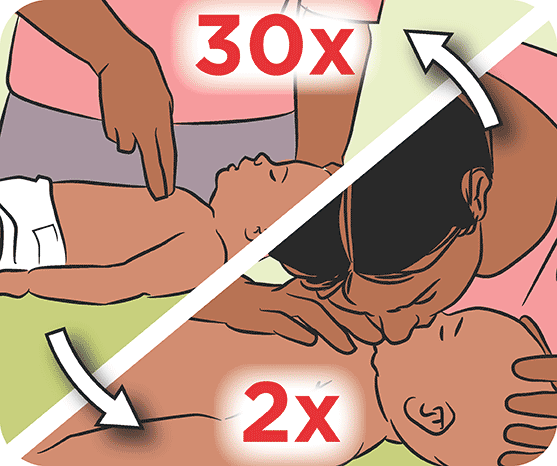
- Place two fingers in the centre of the casualty’s chest.
- Ensure that pressure is not applied to the casualty’s ribs.
- Do not apply any pressure over the upper abdomen or the bottom end of the bony sternum.
- Position yourself directly above the casualty’s chest, and with your arm straight.
- Press straight down on the sternum 100 times per minute.
- Give 30 compressions.
- Compress 1/3 chest depth.
- Give two rescue breaths after every 30 compressions.
- Make sure the jaw and nose are firmly closed.
- For younger infants and children, the head tilt and chin lift process is not necessary.
- Remember to give small breaths to younger children and infants, as their lung capacity is also less developed.
- Remember to cover both your nose and mouth if you are an infant who is very young and does not require pinching the nose.
- Remember to release all the pressure on the chest without losing contact between fingers and the sternum.
The respiratory system differences between infants and adults
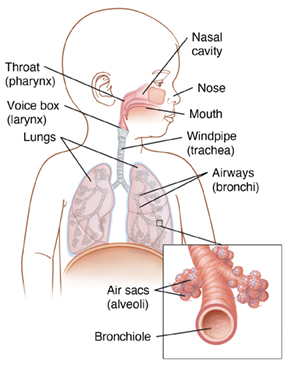
The infant respiratory system is a bit different from that of adults and children. When performing CPR, we have to remember the following key points:
- Infants use their nose to breathe as well as their mouth.
- Infants’ lungs are tiny compared to those of adults.
- Infants have small, floppy airways, which may be damaged by a backward head tilt.
Expanded Learning Materials
Expanded
Learning
Materials
Lesson Content
Quiz