CPR-Lesson 6-CPR for adults and children
The chain of survival
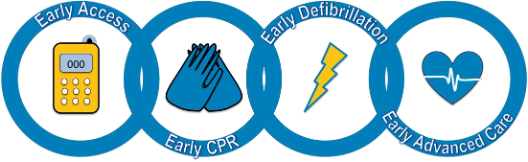
The chain of survival is the process you should follow when someone has a sudden cardiac arrest. Following the 4 links in the chain will mean CPR is more likely to save the person’s life. The 4 links in the chain of survival are:
- Early Access: Recognise the signs that cardiac arrest is imminent and call for help by dialling 000 or 112.
- Early CPR: As soon as you see the victim collapse to the ground, start CPR immediately.
- Early Defibrillation: Request an Automatic External Defibrillator (AED) from a bystander – they are easy to use – and apply it the moment the heart is in an abnormal rhythm. For every minute defibrillation is delayed, there is approximately 10% reduction in survival.
- Early Advanced Care Procedures: The sooner emergency response services personnel can attend to the casualty, the better the chance of survival. Seek assistance from paramedics as soon as possible.
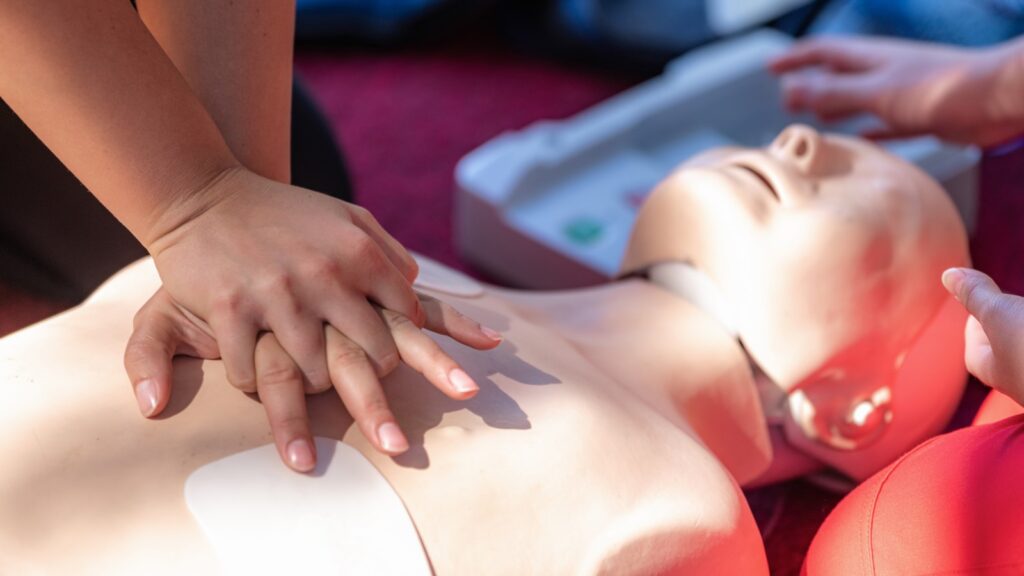
30 chest compressions and 2 rescue breaths
- Kneel by the side of the casualty.
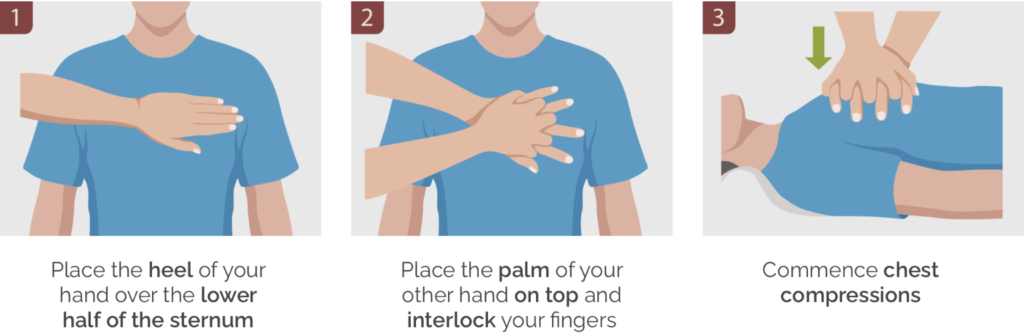
- Place the heel of one hand in the centre of the casualty’s chest, lower half of the sternum (breast bone) in the centre of the chest at nipple line.
- Place the heel of the other hand on top of the first hand and interlock the fingers of the hands.
- Position yourself directly above the casualty’s chest and with your arm straight.
- Press straight down on the sternum 100 times per minute.
- Give 30 compressions.
- Compress 1/3 chest depth.
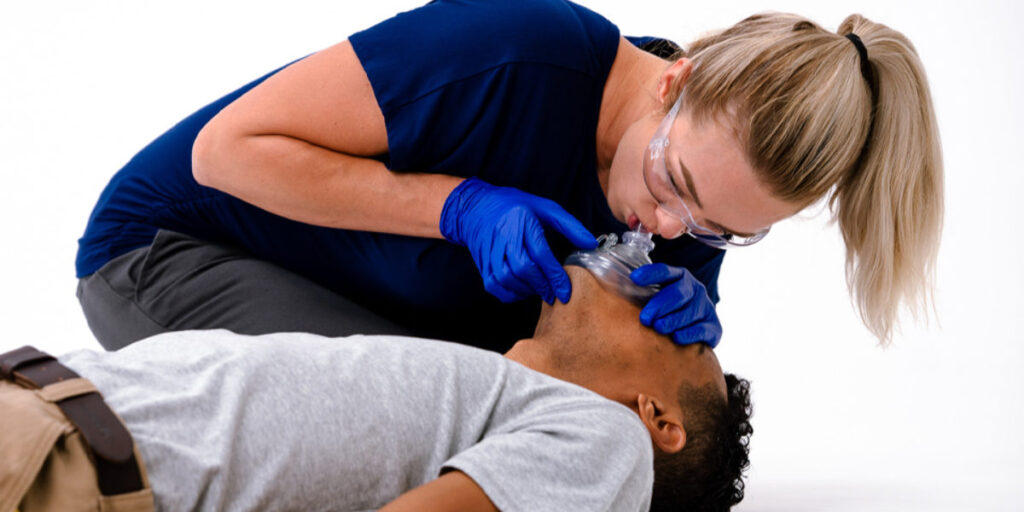
Rescue breaths
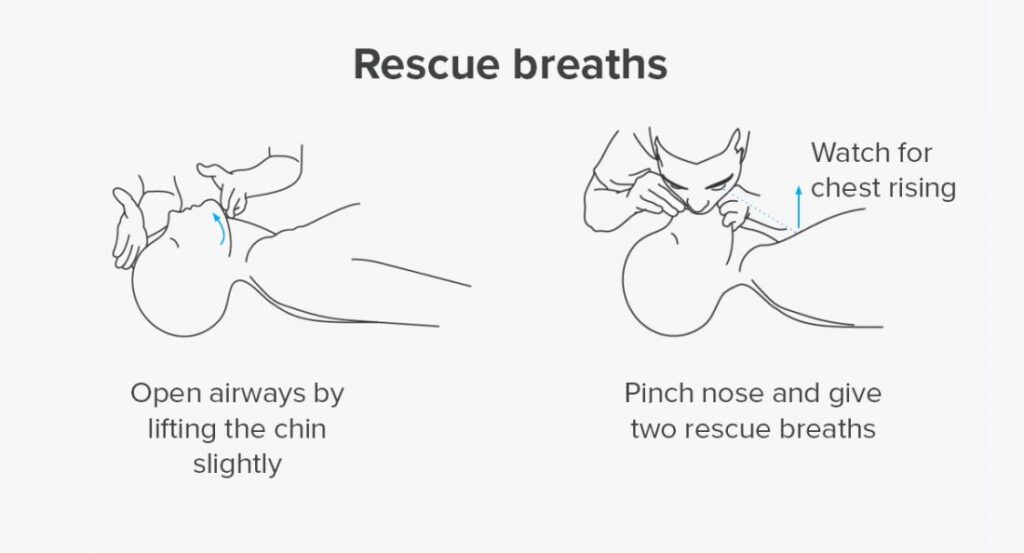
- Give 2 rescue breaths after every 30 compressions.
- Remember to position the head correctly using the head-tilt and chin-lift method.
- Inhale a full breath and place your mouth over the person’s mouth, then give a full breath.
- Don’t forget to pinch your nose or maintain a seal with your cheek to prevent air from escaping.
- Blow the air into the casualty’s mouth and look at the chest to see rise and fall when you breathe in, as it indicates the air is reaching the lungs.
- If the chest is not rising or falling, it means either you are not blowing enough into the lungs or your technique is wrong.
- Return your hands or fingers quickly to the centre of the casualty’s chest and then give the next compressions and breath.
- Continue 30 compressions and two breath cycles.
- Apply an Automated External Defibrillator if it’s accessible.
- Make sure not to apply any pressure over the casualty’s ribs, upper abdomen, or the bottom end of the bony sternum.
Stop CPR
You should only stop CPR if:
- Emergency response services personnel arrive and take over.
- You are physically unable to continue.
- It is unsafe to continue.
- The person starts moving and breathing normally, showing they have recovered. In this case, move them into the recovery position.
Always keep monitoring the person and be prepared to start CPR again if needed.
Expanded Learning Materials
Expanded
Learning
Materials
Lesson Content
Quiz