CPR-Lesson 4-Preapare a CPR
What is cardiopulmonary resuscitation (CPR)?
When a first aider or emergency response team cannot find a pulse or the casualty is not breathing, they perform a technique that combines external cardiac compressions with rescue breaths, known as Cardiopulmonary Resuscitation (CPR).
During CPR, the casualty’s heart and brain require oxygen, which is delivered to the blood circulation through the circulatory and respiratory systems. This process enhances the casualty’s chances of survival and can save lives until the required medical emergency response team arrives and takes over.
The first aider, as the initial responder, needs to assess the casualty’s condition and determine whether CPR is needed. This can be determined by the initial assessment, which involves examining causality, the situation, injuries, and any signs of life, such as the absence of breathing, pulse, or vital signs.
A situation like this can easily illustrate the importance of the first aider’s initial assessment. A situation identifying if the casualty has a sudden cardiac arrest, or is in need of a chain of survival. During an initial assessment, if a vital sign cannot be found, CPR must be performed immediately.
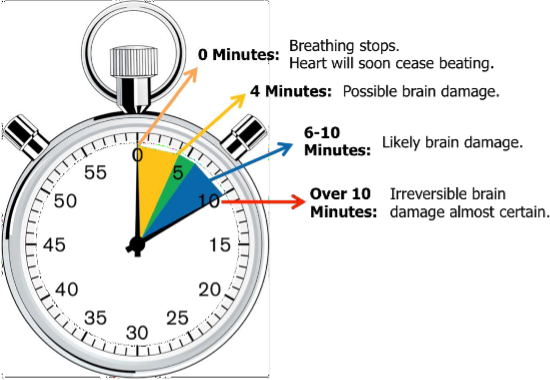
If a first aider failed to initiate the CPR immediately, it could lead to brain death, which is not recoverable. A prompt response to CPR can increase the chance of survival for the casualty in any situation.
As a first aider, you need to ensure that timing is crucial when handling a life-and-death situation. For brain damage to occur, it will take only four 4 minutes for a complete brain death due to oxygen deprivation.
As per the Australian Resuscitation Council, if a casualty has no signs of life and becomes unconscious, not responding, or not breathing normally or moving, you need to start compressions or CPR.
Remember, if a casualty is not responding and remains unconscious with the absence of breathing, a first aid provider should immediately start the DRSABCD process and perform CPR if required.
Chain of survival
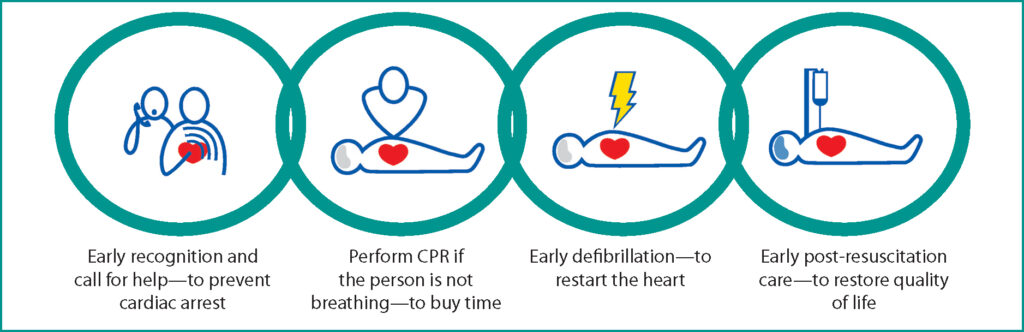
The key to improving the survival rate from cardiac arrest is the four steps:
- 1. Early recognition and call for help.
- 2. Begin CPR immediately.
- 3. Early defibrillation.
- 4. Advanced life support.
DRSABCD
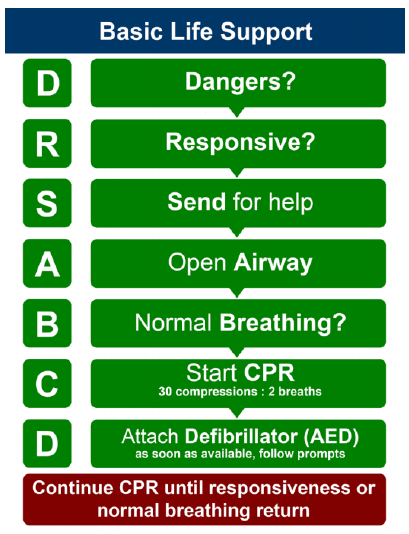
Before having a resuscitation, take the following initial steps, called DRSABCD.
DRSABCD
- Check for danger (hazards/risks/safety)
- Check for response (if unresponsive)
- Send for help
- Open the airway
- Check breathing (if not breathing / abnormal breathing)
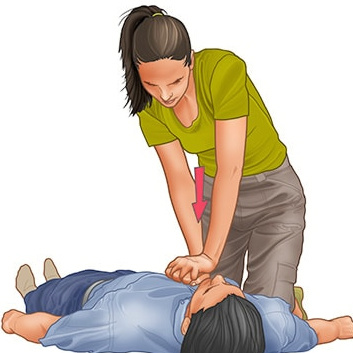
- Give 30 chest compressions (almost two compressions/second) followed by two breaths
- Attach an AED (Automated External Defibrillator) if available and follow the prompts.

DANGER
Check the surrounding area and make sure it’s safe for you, the injured person and others in the area. Do this by looking, listening and smelling.
If the casualty is in immediate danger, move them only if it is safe to do so.
Try to lift or move the person in a way that won’t cause further harm, and remember to protect yourself from back strain or other injuries.
RESPONSE
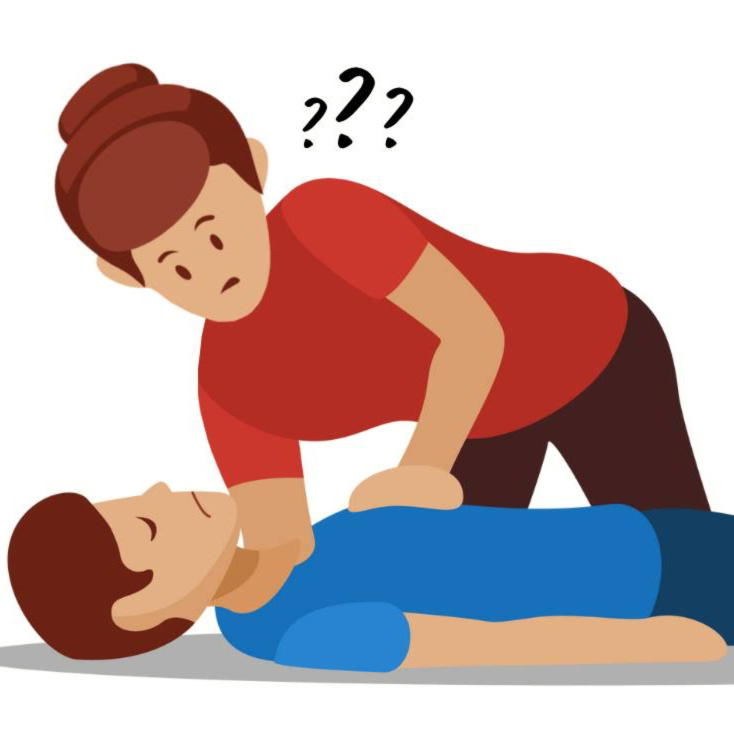
Check for response “Can you hear me?” “Open your eyes” “What’s your name?” “Squeeze my hand.”
If you do not get a response, call 000 immediately.
Squeeze the casualty’s shoulders. If the casualty is unresponsive, prepare to perform CPR. If the casualty is conscious, carry out a ‘no touch’ examination beginning at the head, asking questions and observing the casualty.
SEND FOR HELP
Call 000 or 112 for help.
If possible, ask the bystander to make the call while you stay with the casualty and treat them.
If you are on your own you should shout for help. If no one comes, start CPR straight away.
In an emergency at work you could ask your colleagues, supervisors or anybody close by to help. Someone might be able to take over the treatment if you get tired doing CPR.
AIRWAYS
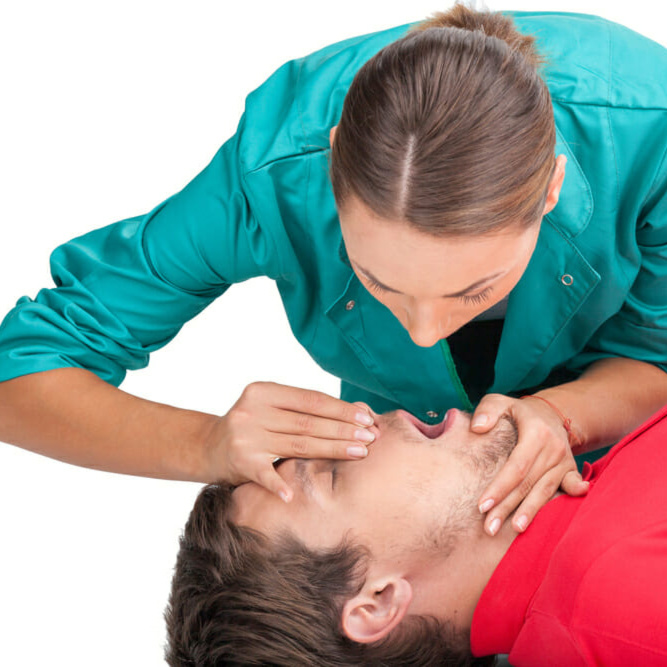
- Look in the mouth for foreign material.
- If clear, lift the chin to open the mouth and tilt the head back to move the tongue out of the way.
- If not clear, roll casualty on side and clean out mouth, then tilt head to open airway
- When clear, listen to the breath.
BREATHING
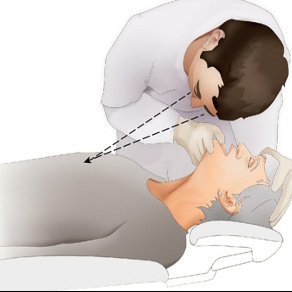
- Look, listen and feel for normal breathing.
- Normal breathing is 12-20 breaths per minute or at least 2 breaths in 10 seconds.
- If the casualty is breathing, roll into recovery position and monitor.
- Noisy, irregular breathing is not normal.
- If the casualty is not breathing or if there is abnormal breathing, prepare for CPR.
CPR
Take CPR to increase the chance of survival.
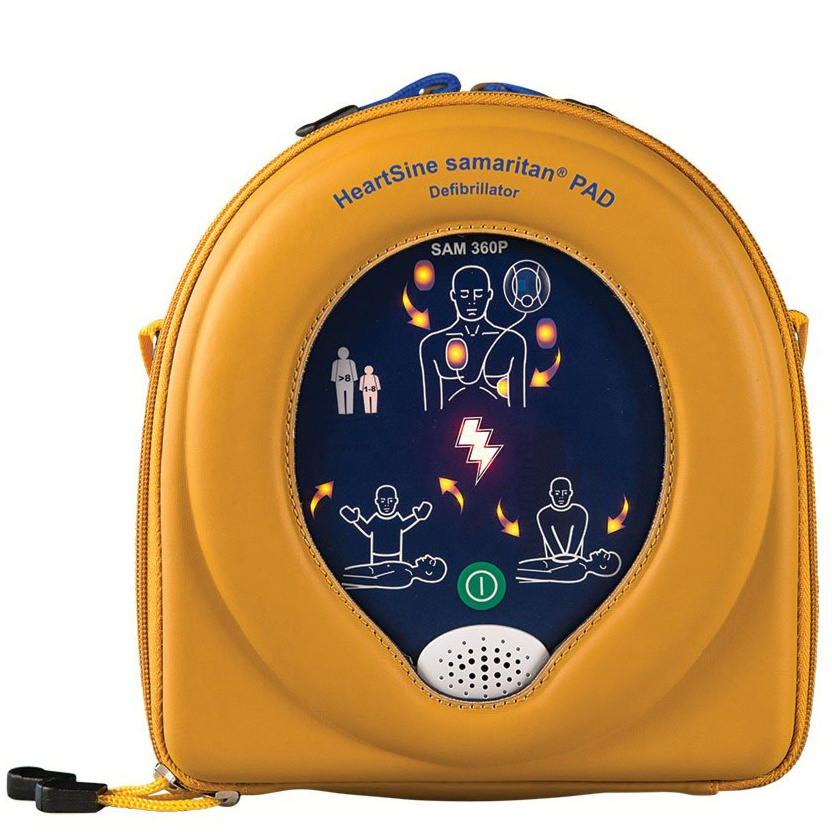
Use an AED (Automated External Defibrillator) if available, and follow the prompts.
Expanded Learning Materials
Expanded
Learning
Materials