CPR-Lesson 1-Recognise and respond to an emergency
Emergency
A situation can only be defined as an emergency if one or more of the following are present:
- Immediate threat to life, health, property or environment
- Loss of life, negative impacts on health, damage to property or the environment.
- The situation is very likely to worsen and pose an immediate danger to life, health, property, or the environment.
It is important that you know how to recognise the signs of a possible emergency. Sometimes this can be hard, but using all your senses may help.
Signs of an emergency may include unusual noises, sights or smells and behaviours such as:
- Alarms and sirens, moaning, crying or yelling and sounds of breakage, crashing or falling.
- Stalled or crashed vehicle, spilled chemicals, a person collapsed on the floor, or someone who seems to be confused, in pain or having trouble breathing.
- Different or stronger smells than usual (be very careful in these situations, as any fumes may be poisonous).
Your first aid skills and limits
Paramedics have advanced first aid skills.
When they arrive to treat the casualty, they can apply advanced life support procedures for which they are qualified.
As a first aider/resuscitator, you are not expected to be an expert. Your role is to respond promptly, prioritise, and proactively apply the principles of first aid management and CPR.
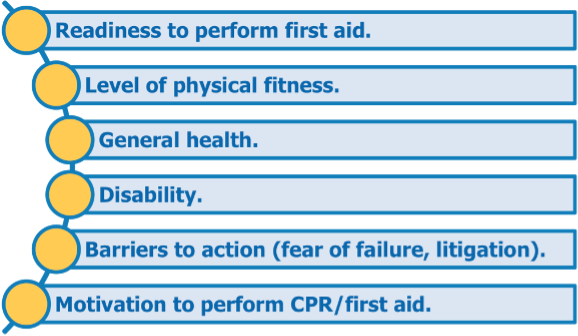
Going ahead with first aid and CPR without the right skills or knowledge could make the situation worse. You could even end up in court. Be aware of your own personal limitations, including:
It is also a good idea to keep working on your first aid skills. Your First Aid skills should be refreshed every 3 years, and your CPR skills should be refreshed every year.
Your workplace might provide training to help you keep your skills up to date. You could also do your own reading and research.
There will always be something you can learn to become a more effective first aider.
Expanded Learning Materials
Expanded
Learning
Materials