First Aid-Lesson 8-Stroke
Symptoms of a stroke?
en and important nutrients for proper functioning. If brain cells do not get enough of this supply, they become stressed and die.
The symptoms of a stroke usually appear suddenly. Initially, the person may feel sick and look pale and unwell. They may complain of a sudden headache or dizziness.
They may also:
- Have sudden numbness, weakness or paralysis in their face or limbs, particularly down one side of their body;
- Appear confused, having problems with concentration or memory;
- Have trouble talking or understanding what is being said to them;
- Have difficulty swallowing;
- Have vision problems;
- Have trouble walking;
- Unsteadiness or a sudden fall; or
- Have difficulty coordinating their movements and keeping their balance.
Sometimes a seizure (fit) or loss of consciousness occurs. Symptoms depend on the part of the brain that is affected and the size of the stroke.
2 main types of strokes
Ischaemic stroke
Ischaemic stroke is the most common type of stroke and is caused by a blockage of the blood vessels supplying the brain. There are 2 types of ischaemic stroke:
- A thrombotic stroke is caused by a blood clot (thrombus) forming in one of the arteries of the head or neck, which severely reduces the blood flow. The thrombus may be a result of a build-up of fatty deposits (plaques) in the blood vessels.
- An embolic stroke (or cerebral embolism) occurs when a blood clot that forms elsewhere in the body (for example, in the heart) travels through the circulatory system to the brain. The travelling clot is called an embolus.
Haemorrhagic stroke
A haemorrhagic stroke occurs when a blood vessel in or near the brain bursts, damaging an area of the brain.
There are 2 types:
- Subarachnoid haemorrhage, which occurs in the space around the brain, and
- Intracerebral haemorrhage is the more common type, which involves bleeding within the brain tissue itself.
Haemorrhagic strokes can be caused by problems such as high blood pressure or by a problem with a blood vessel in or on the surface of the brain, such as an aneurysm or arteriovenous (AV) malformation.
Damage to brain cells from a haemorrhagic stroke can be due to:
- The blood from the burst vessel damages brain cells.
- Inadequate blood supply to areas of the brain, especially beyond the leaking vessel, and
- Pressure and swelling within the brain due to irritation from the leaked blood.
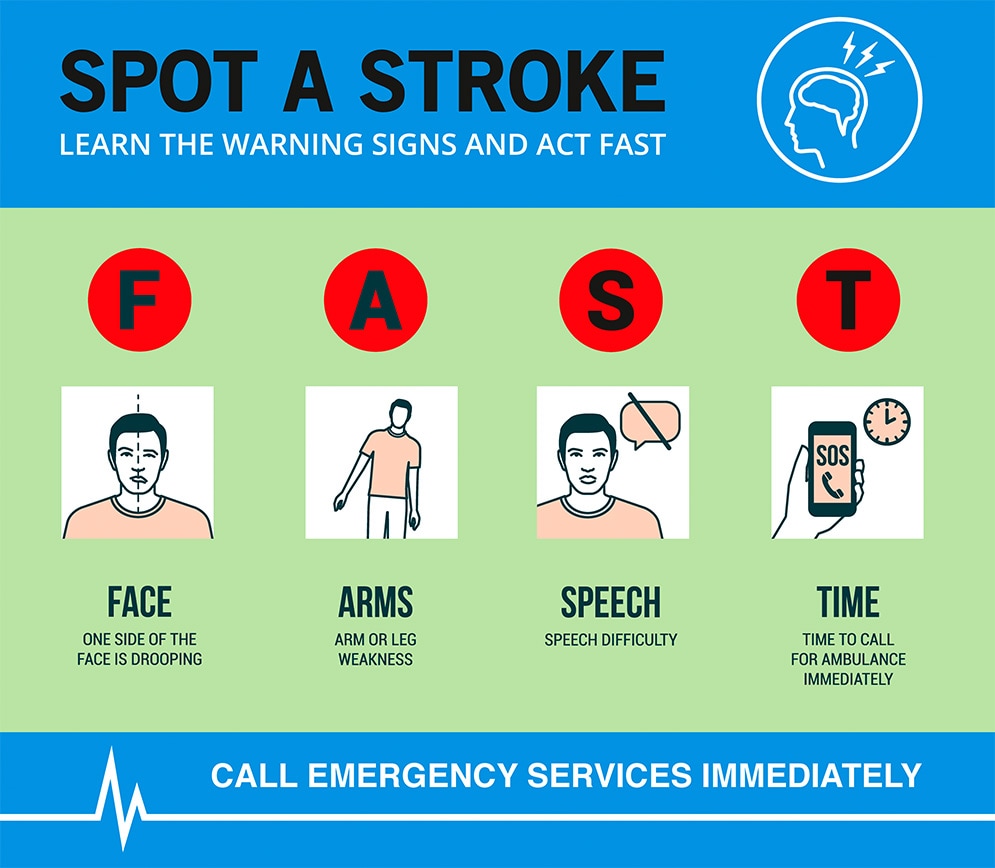
F.A.S.T. test
Early treatment for stroke is critical – the longer a stroke remains untreated, the greater the chance that stressed brain cells will die, leaving behind permanent stroke-related brain damage.
That’s why it’s important to recognise the signs and symptoms of stroke, as well as the causes of stroke.
The Stroke Foundation in Australia recommends the F.A.S.T. test to check for signs and symptoms that may be caused by stroke.
- Face: Is one side of the face drooping? Can the person smile?
- Arms: Can the person lift both arms above their head? Can they keep both arms up, or does one arm drift down?
- Speech: Can the person understand you and speak clearly, or is their speech slurred?
- Time: If you notice any of the above signs, call 000 for an ambulance immediately.
First aid for a stroke
- Positioning: Help the person to lie down in a comfortable position, preferably on their side with their head and shoulders slightly raised and supported by pillows.
- Loosen Clothing: Loosen any restrictive clothing (e.g., tight collars, ties) to assist with breathing.
- Reassurance: Keep the person calm and quiet. Reassure them that help is on the way.
- Monitor: Watch them closely for any changes in condition.
- Keep Warm: Use a blanket to keep them comfortable.
- Note the Time: Remember or write down the time symptoms started to inform paramedics.
Expanded Learning Materials
Expanded
Learning
Materials